
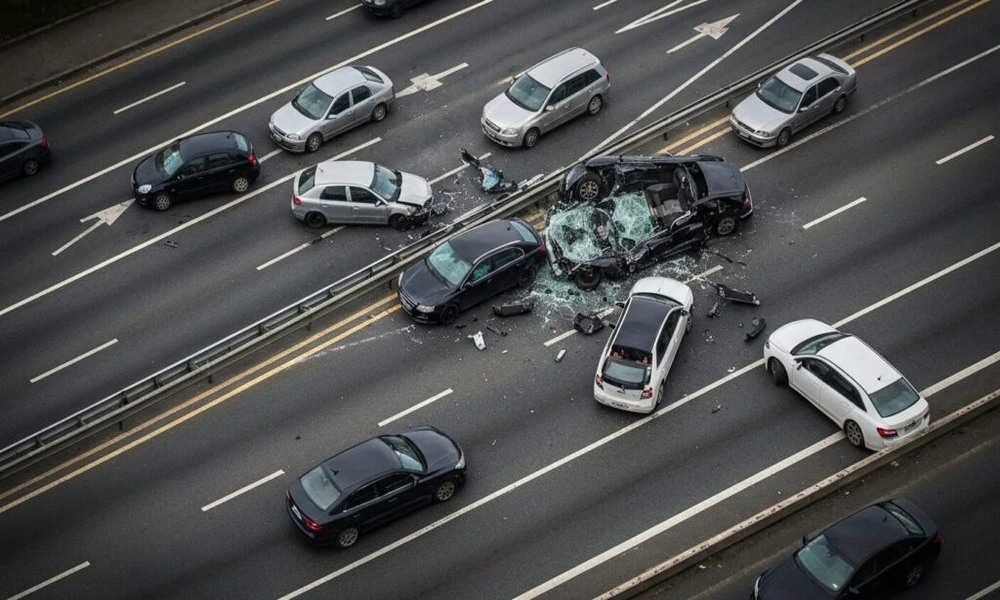
Determining who is responsible after a Florida car accident isn’t always straightforward. In many cases, more than one driver may share responsibility for the crash. That’s where Florida’s comparative negligence law comes into play. Understanding how comparative negligence works can help you protect your rights and better understand how fault may affect the compensation you receive after an accident.
Key Takeaways
- Florida follows a modified comparative negligence system for most car accident claims.
- More than one driver can share fault for the same accident.
- Your percentage of fault can reduce the compensation you receive.
- An experienced attorney can help gather evidence to minimize unfair fault allegations.
What Is Comparative Negligence?
Comparative negligence is a legal rule that allows fault to be divided among everyone involved in a Florida car accident. Instead of assigning all responsibility to one person, insurance companies and courts determine each party’s percentage of fault based on the evidence.
For example, if one driver was speeding while another failed to yield, both drivers may share responsibility for the collision. The percentage assigned to each driver directly affects the amount of compensation that may be available.
How Florida’s Modified Comparative Negligence Rule Works
Florida follows a modified comparative negligence system. If you are found partially responsible for the accident, your compensation is reduced by your percentage of fault.
For example:
- If your damages total $100,000 and you are found 20% at fault, you could recover $80,000.
- If you are found 40% at fault, your recovery would be reduced to $60,000.
However, if you are found to be more than 50% responsible for the accident, Florida law generally prevents you from recovering damages from the other party in most negligence claims.
What Evidence Determines Fault?
Insurance companies and attorneys review several types of evidence when determining fault after a Florida car accident, including:
- Police accident reports
- Photographs and videos from the accident scene
- Witness statements
- Vehicle damage
- Traffic camera or dashcam footage
- Cell phone records in distracted driving cases
- Expert accident reconstruction analysis
The stronger the evidence, the easier it is to establish who caused the collision.
Why Insurance Companies Often Dispute Fault
Insurance companies know that assigning more fault to an injured driver can significantly reduce the amount they have to pay. An adjuster may argue that you were speeding, following too closely, or failed to avoid the collision-even when another driver clearly caused the accident.
That’s why it’s important not to give recorded statements or accept blame before speaking with an attorney. What seems like a harmless comment could be used to reduce or deny your claim.
How Attorney Kevin L. Sullivan II Can Help
Proving fault after a Florida car accident often requires a detailed investigation. Attorney Kevin L. Sullivan II, a Florida Personal Injury and Accident Attorney, has recovered more than $35,000,000 for clients by building strong cases backed by evidence and skilled legal advocacy.
Clients receive Superior Communication You Can Count On, a FREE No-Obligation Consultation, Attorney Kevin’s direct cell phone number (813) 598-4868, and no attorney’s fees unless you win. While Attorney Kevin handles the insurance companies and legal process, you can focus on your recovery.
Conclusion
Determining fault after a Florida car accident is not always as simple as pointing to one driver. Florida’s comparative negligence law recognizes that multiple people can contribute to an accident, but it also ensures that injured victims may still recover compensation when another person’s negligence played a role. If fault is being disputed, experienced legal representation can make a meaningful difference in protecting your rights and pursuing the compensation you deserve.
Frequently Asked Questions
1. What is comparative negligence in Florida?
Comparative negligence is a legal rule that assigns each party a percentage of fault for a car accident, which can affect the amount of compensation available.
2. Can I recover compensation if I was partially at fault?
Yes. Under Florida’s modified comparative negligence law, you may still recover damages if you are 50% or less at fault, although your compensation will be reduced by your percentage of fault.
3. Who decides fault after a car accident?
Insurance companies initially evaluate fault, but if a claim goes to court, a judge or jury may determine each party’s percentage of responsibility.
4. What evidence helps prove fault?
Police reports, witness statements, photographs, surveillance footage, vehicle damage, and expert analysis are commonly used to establish liability.
5. How can Attorney Kevin L. Sullivan II help with my case?
Attorney Kevin investigates the accident, gathers evidence, negotiates with insurance companies, and fights for the maximum compensation available-all with a FREE consultation and no attorney’s fees unless you win.
This post was written by a professional at LeavenLaw. Attorney Kevin L. Sullivan II is your auto accident attorney Largo and an experienced personal attorney near you for LeavenLaw. Kevin is proud to serve Florida accident victims that have been injured in auto accidents, motorcycle accident, slip and falls or have suffered any other type of injury caused by negligence. Kevin offers a FREE no-obligation consultation to discuss your claim. There are NO upfront fees or costs and if he does not collect for you, you do not owe him anything.
